
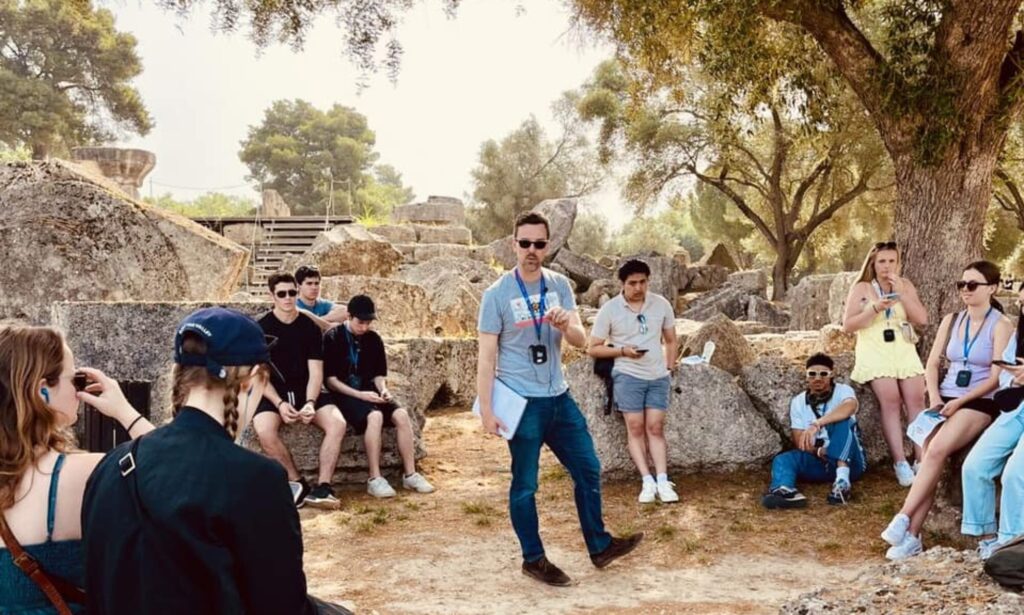
Sheldon Wolin once wrote that education, in its fullest sense, promotes learning “that is civic and populist” as well as egalitarian and democratic. Such an education, however, does not always align with prevailing institutional or political priorities, as Socrates learned the hard way. His example of the teacher as both gadfly and co-learner remains a powerful pedagogical inspiration to me. I understand teaching as a civic art that seeks to develop lifelong habits of critical reflection, the capacity to question conventional wisdom, to reason carefully with others, and to apply ideas responsibly to the ethical challenges of public life.
In the spirit of the ancient Greek ethos of παιδεία, I believe that education must be an all-encompassing process of moral, intellectual, and civic formation that empowers students to become active agents in their own learning. For education to be a practice “fitted for freedom,” as Martha Nussbaum writes, it must offer students the tools to examine not only the material at hand but the basis of pedagogical authority itself, including the ethical dimensions that guide classroom decisions.
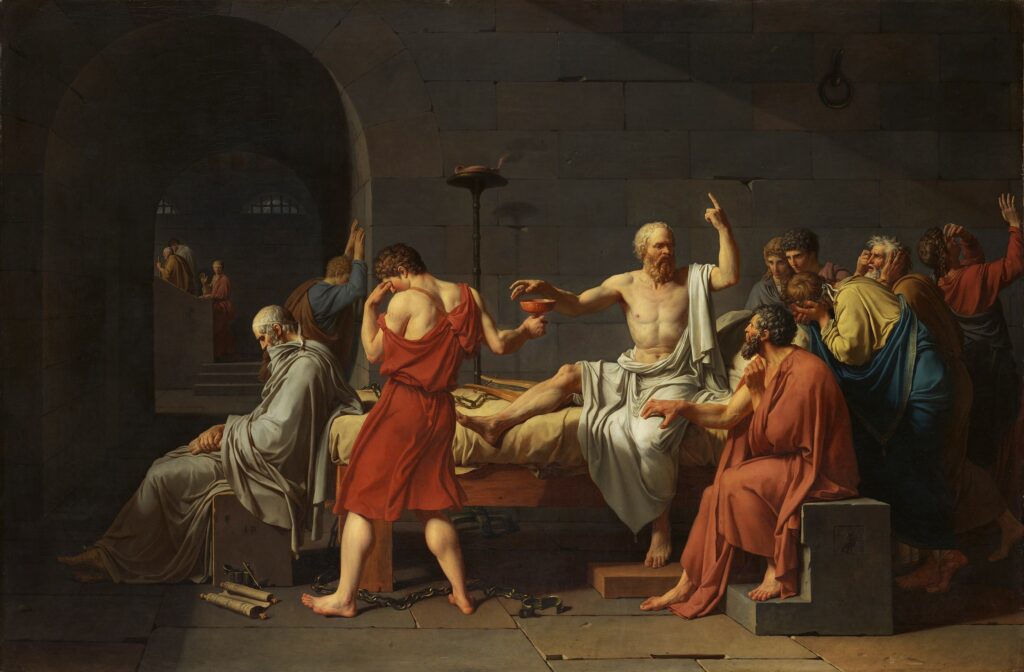
Political Thought

Foundations of Critical Inquiry: Justice and Inequality
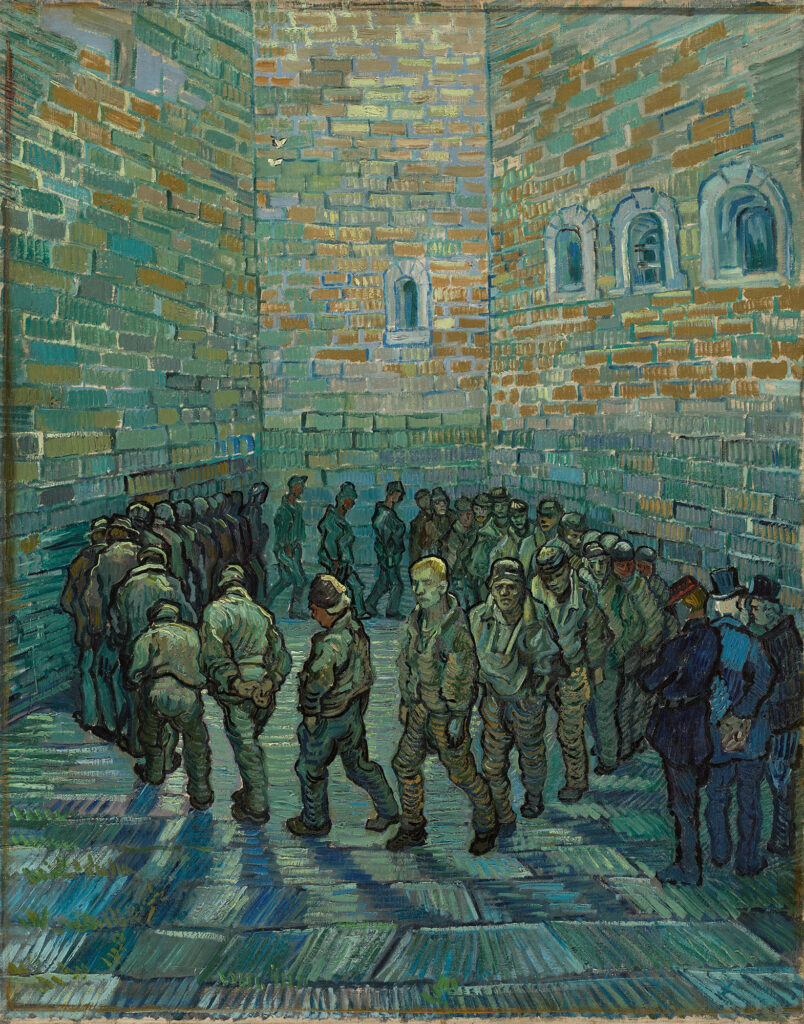
The Politics of Punishment
Syllabus: The Politics of Punishment

Ancient Athens and the Birth of Political Thought
Syllabus: Ancient Athens and the Birth of Political Thought

U.S. Politics
“The paradox of education is precisely this — that as one begins to become conscious one begins to examine the society in which he is being educated. The purpose of education, finally, is to create in a person the ability to look at the world for himself, to make his own decisions, to say to himself this is black or this is white, to decide for himself whether there is a God in heaven or not. To ask questions of the universe, and then learn to live with those questions, is the way he achieves his own identity. But no society is really anxious to have that kind of person around.” — James Baldwin